Freezer storage has changed a lot in the past few years. People are cooking in batches more often, storing homemade baby food, preparing pet meals in advance, and trying to keep kitchens more organized without relying on disposable containers.
Because of that, silicone freezer trays have gradually become more common in daily life. At first, many people saw them as just another kitchen gadget. But after actually using them, especially for soup, broth, puree, or meal prep, the convenience becomes pretty obvious.
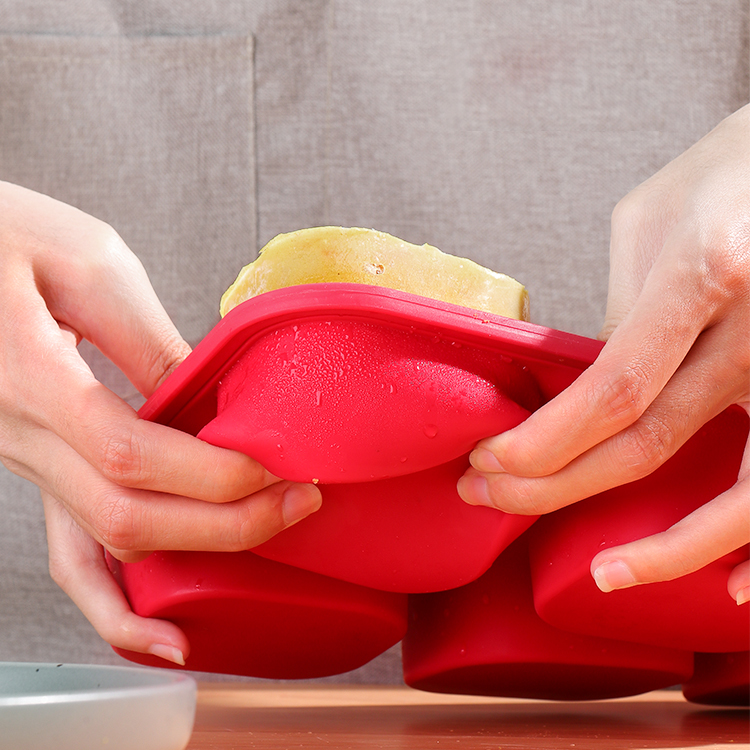
Compared with rigid plastic containers, silicone trays are easier to handle after freezing. You can press from the bottom and release individual portions instead of waiting for a whole container to thaw. For families that cook ahead during the week, that difference matters.
We’ve also noticed demand growing steadily from brands and distributors looking for reusable freezer storage products. Meal prep companies, baby food startups, pet brands, and Amazon sellers are all paying more attention to this category.
This article looks at how silicone freezer trays are used, why some designs work better than others, and what buyers usually pay attention to when sourcing these products.
A silicone freezer tray is a portioned food storage tray made from food-grade silicone. Most designs include multiple compartments so users can freeze food in smaller servings instead of storing everything in one large container.
They are commonly used for:
Soup
Bone broth
Baby puree
Sauce cubes
Meal prep portions
Pet food
Leftovers
One reason people prefer silicone is simple: frozen food comes out more easily.
With hard plastic containers, users often need to run warm water over the bottom or wait for partial thawing. Silicone is more flexible, so frozen portions can usually be pushed out directly.
Some newer designs also add reinforced rims, especially for trays intended for liquid foods like soup or broth.
This is probably the biggest reason.
Frozen soup or puree sticking inside containers is frustrating, especially when users only want one portion. Silicone reduces that problem quite a bit because the tray can flex slightly during demolding.
It’s especially useful for things like:
Bone broth cubes
Baby food
Sauce portions
Fresh pet food
People who batch cook every week tend to care more about small usability details than people expect.
A lot of home kitchens now work more like light meal-prep systems.
Instead of cooking daily, many families prepare food once or twice a week and freeze portions ahead of time. Freezer trays help separate food into consistent serving sizes, which also cuts down waste.
Typical examples:
| Application | Common Portion Size |
|---|---|
| Baby food | 1–2 oz |
| Bone broth | ½ cup |
| Soup | 1 cup |
| Sauce cubes | Small sections |
| Pet food | Customized portions |
This is one reason silicone freezer trays are no longer only consumer products. Meal prep businesses and commercial kitchens use them too.
Consumers are more cautious now about disposable storage products and lower-quality plastics.
A reusable silicone tray can last for years if the material quality is good. That makes it attractive for brands positioned around sustainability, especially in kitchenware and food storage.
You can see this trend clearly on Amazon and in independent kitchen brands. Products marketed around “reusable,” “low waste,” or “meal prep organization” usually perform better than generic storage containers with no clear positioning.
Food-grade silicone works across a fairly wide temperature range, so most trays can move between:
Freezer
Microwave
Dishwasher
Oven
For users, this simply makes the product easier to live with. They don’t need separate containers for different situations.
This is probably the most common use case now.
People freeze:
Chili
Curry
Soup
Pasta sauce
Rice portions
Smoothie ingredients
Instead of defrosting an entire container, they remove only what they need.
For smaller households, that helps reduce wasted food quite a bit.
Many parents prefer preparing baby food themselves, especially puree-based foods.
Silicone trays work well for:
Vegetable puree
Fruit puree
Yogurt portions
Breast milk storage
The smaller cavity sizes are convenient because infant portions are usually small anyway.
Another detail people care about is durability under freezing temperatures. Lower-quality plastics can become brittle over time, while silicone generally stays flexible.
Fresh pet food has become a much larger market than it was a few years ago.
A lot of pet owners now prepare food in batches and freeze daily portions ahead of time. That includes:
Raw food mixes
Bone broth
Wet food blends
Supplements
We’ve seen more inquiries from pet food startups recently, especially brands looking for custom molds or private label packaging.
Freezer trays are also used in professional kitchens for practical reasons.
Restaurants and catering businesses often freeze:
Sauce bases
Concentrated broth
Ingredient portions
It speeds up prep work and keeps portions more consistent during busy service hours.
Meal delivery brands use them for similar reasons.
The kitchenware market is crowded now. Generic products are difficult to stand out with, especially online.
That’s why more brands are moving toward customized products instead of standard molds.
Typical customization requests include:
Embossed logo
Debossed logo
Printed logo
Laser engraving
Many brands choose specific Pantone colors to match packaging or brand identity.
Neutral tones are especially popular lately:
Sage green
Cream white
Earth tones
Soft pink
Dark gray
Common requests include:
Kraft boxes
Color retail boxes
Instruction inserts
UPC labels
Some buyers develop entirely new structures, including:
Stackable trays
Different cavity shapes
Locking lids
Reinforced frames
For brands trying to avoid direct price competition, custom structure matters more than many people think.
China is still one of the main production centers for silicone kitchenware, especially for OEM and private label manufacturing.
For buyers, the main advantages are usually:
Established factories are already familiar with:
Food-grade silicone production
Compression molding
Liquid silicone molding
FDA and LFGB standards
That experience reduces development mistakes.
For medium or large production runs, manufacturing costs are usually more competitive compared with local production in Western countries.
That matters for:
Amazon sellers
Startup brands
Retail chains
Wholesalers
Many factories now support the full process:
Product drawings
Mold development
Sampling
Packaging
Mass production
For newer brands without internal product teams, that support is important.
If you want to learn more about home products solutions, you can click on this link to get more information.
https://www.joyioem.com/pages/silicone-household-products 
When people first look at freezer trays, they usually focus on cavity size, lid design, or appearance.
But structurally, the rim construction affects a lot of things:
Stability
Leakage
Carrying experience
Product lifespan
Customer reviews
Most freezer trays on the market fall into three categories.
This structure uses silicone only, with no reinforcement inside.
Good cold resistance
Flexible
Less risk of cracking
Easier food release
For lighter applications like snack trays or ice molds, this structure is usually fine.
The tray can become too soft when filled with liquid.
Users often notice:
Instability while carrying
Lid deformation
Poor sealing
Higher spill risk
For soup or broth trays, thin pure-silicone structures sometimes feel flimsy unless the walls are made thicker.
But increasing thickness also raises material cost and product weight.
This design places a plastic frame inside the silicone rim.
It’s common in mid-range products because it improves support without increasing cost too much.
Better structure
Easier to carry
Improved lid fit
Lower cost than steel reinforcement
Plastic does not handle repeated twisting under freezing conditions as well as silicone or stainless steel.
This becomes noticeable over time when users bend trays aggressively to release frozen food.
If the internal frame cracks:
Support weakens
Sealing performance drops
Product lifespan shortens
For Amazon brands, this can eventually turn into negative reviews.
When this product was first designed, we decided to strengthen its stability by using a plastic frame inside the border and covering it with silicone on the outside. This indeed made the product more sturdy.
However, when one of our customers purchased it for sale, it initially sold very well. But soon after, some negative reviews started to appear, saying that the border was not durable and it was prone to breaking when twisting and demolding.,This was a failure case.
However, it did prompt us to replace the plastic inner core with a steel ring. Of course, if consumers treated the plastic inner core with care, such as not forcefully twisting and demolding, it wouldn't have happened. But this was not friendly to Amazon sellers. It was important for an Amazon product SKU to avoid the possibility of receiving negative reviews.
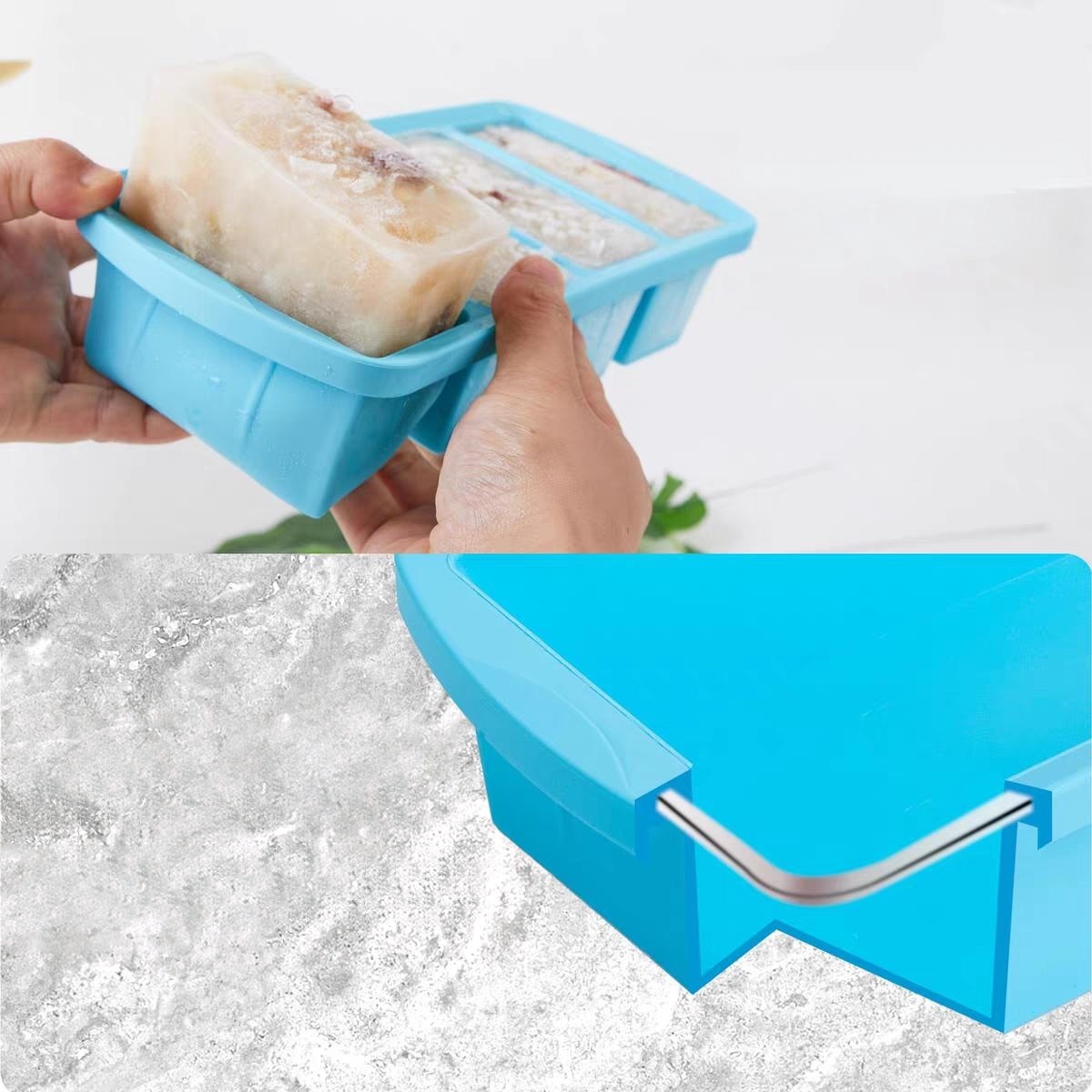
This structure uses a stainless steel ring embedded inside the silicone rim.
It’s generally considered the premium option.
Better carrying stability
Stronger structure
Improved sealing
More durable during repeated use
Better support for liquid foods
For soup or broth storage, the difference is noticeable. A fully filled tray feels more secure when moving it into the freezer.
That improves user experience more than people expect.
The downside is mainly cost.
Steel reinforcement increases:
Material cost
Assembly complexity
Production precision requirements
Still, many premium brands accept the added cost because durability affects customer satisfaction directly.
| Rim Structure | Advantages | Disadvantages | Best Applications |
|---|---|---|---|
| Pure Silicone | Flexible, cold-resistant, easy release | Soft structure, weaker support | Ice trays, snack trays |
| Plastic Reinforced | Better support, moderate cost | Plastic may crack over time | Budget freezer trays |
| Steel Reinforced | Strong structure, durable, stable | Higher production cost | Soup and broth freezer trays |
Not all silicone freezer trays are made to the same standard.
Experienced buyers normally focus on a few practical areas.
Factories should be able to confirm:
BPA-free silicone
Food-grade material
Poorly designed trays often become unstable when carrying liquid food.
Many stronger designs now include:
Steel-reinforced rims
Thicker walls
Reinforced lids
Low-precision molds can lead to:
Flash edges
Uneven surfaces
Lid leakage
Inconsistent cavity sizes
These issues become obvious quickly in customer reviews.
We often encounter situations where customers ask why the molds from another supplier are so much cheaper.
However, the costs are actually quite similar for everyone. If the other supplier's products are cheaper, it could be because they have saved time through a certain process, or they chose a more prone-to-rust material for the molds.
A good mold can directly determine the appearance, smoothness and texture of the product.
Reliable manufacturers usually support sampling before mass production.
That allows buyers to test:
Sealing performance
Freezing usability
Packaging fit
Carrying stability
Before committing to large orders.
A few problems come up repeatedly in reviews and cooking communities.
Liquid expands after freezing.
If trays are overfilled, pressure can push the lid upward slightly.
Some manufacturers now add:
Fill lines
Flexible lids
Stronger side walls
To reduce this issue.
As I mentioned above, different designs of silicone soup containers with different borders correspond to different foods.
Regarding the issue of the silicone material absorbing odors, this is a common problem. This is due to the characteristics of the silicone molecules.
Silicone freezer trays started as fairly simple kitchen products, but the category has expanded a lot.
Now they’re used for meal prep, baby food storage, pet feeding, soup portioning, and commercial food preparation.
For brands entering this market, product quality and structural design matter more than appearance alone. Users notice details quickly, especially when dealing with liquid food storage.
Whether it’s a reusable soup freezer tray, a broth freezer container, or a fully customized private label product, the manufacturing side plays a major role in long-term product performance.
Did you want to know more about silicone freezer tray? please see the below↓
https://www.joyioem.com/blog-detail/silicone-soup-freezer-tray-overflow-solution
https://www.joyioem.com/blog-detail/silicone-freezer-tray-steel-rim-vs-pure-silicone